Search This Blog

Showing posts with label revolver. Show all posts

Monday, January 13, 2014

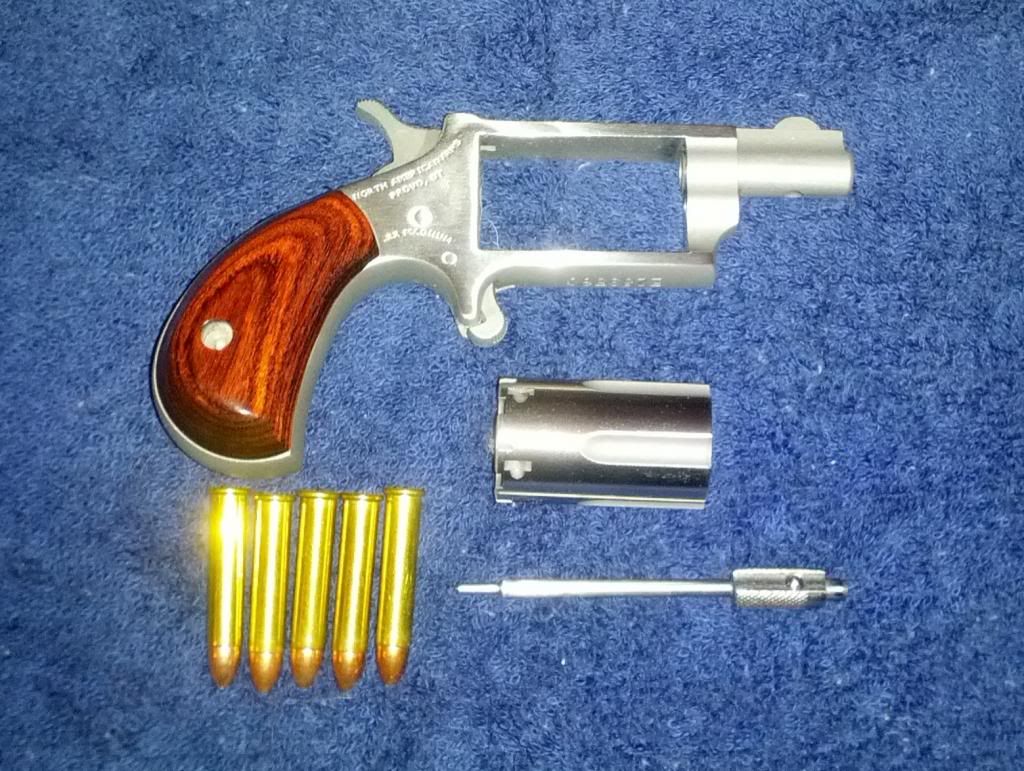
Gun Review: North American Arms Mini Magnum Revolver .22 WMR

As more and more citizens take advantage of their 2nd Amendment right to bear arms, specifically with respect to concealed carry, it seems that nearly every firearm manufacturer is racing to produce ever smaller pistols to fill this niche.  The names we have traditionally associated with compact pistols, such as Kel-Tec, Rohrbaugh, and Seecamp, have been joined by a host of others, some new, some old:  Ruger, Smith & Wesson, Kahr, Diamondback, and Taurus, just to name a few.  But one company has been producing "pocket pistols" of the highest quality for about forty years, and continue to do so today:  North American Arms.  NAA has a large selection of firearms, from pocket sized semi-automatics to what may be the "definitive" NAA product, the Mini-Revolver, in .22 Short, .22 LR, and .22WMR (aka ".22 Magnum").  Today, I will be looking at the NAA Mini Magnum, a five-shot mini revolver in .22 Magnum, which I purchased from my friends at Tri Cities Gun Depot.

Image courtesy of northamericanarms.com

The North American Arms Mini Magnum is a palm-sized, five-shot, single-action revolver.  The revolver frame is milled from a solid billet of stainless steel.  This particular model is available with either a 1 1/8" or a 1 5/8" barrel, either ported or non-ported.  There are also different grip options available, including standard rosewood, imitation mother-of-pearl (black, white, or pink), as well as a folding holster grip which covers the trigger when folded and has a handy clip to keep the gun properly aligned while in your pocket.

Image courtesy of northamericanarms.com

These guns are extremely well-made.  Everything on the revolver - from the frame, to the cylinder, to the grips - everything is tight, polished, and well-fitted.  No machine marks to be seen.  The trigger is fantastic and the cylinder lock-up is rock solid. My Mini Magnum is truly one of the best looking firearms I have ever owned.  And just in case something does fail, NAA offers a lifetime warranty to the original registered owner.

The model I have is the 1 1/8" non-ported barrel with rosewood grips.  The revolver is 4 3/4" long, 2 7/8" high, 7/8" thick, and weighs in at a whopping 5.9 oz empty.  It completely disappears in my front pocket (I made a pocket holster out of leather in order to keep the gun properly indexed while in my pocket, as well as to help keep lint from clogging up the works).  This really is a gun you can take with you anywhere, regardless of what you are wearing.
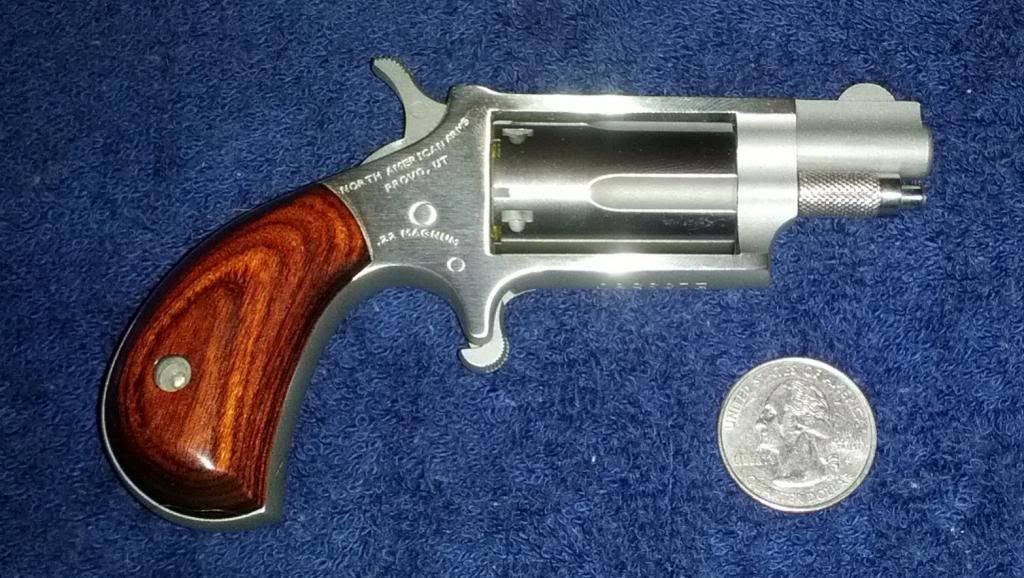
Pocket-sized personal protection

The Mini Magnum's cylinder must be removed in order to load and unload the firearm.  This is accomplished by pushing in a button on the end of the cylinder pin, then pulling the pin out of the front of the firearm.  Placing the firearm on half-cock, the cylinder may then be swung out for loading.  In unloading, the cylinder pin may be used to push out stubborn empty cases.  Once the cartridges are loaded, the cylinder is then replaced into the frame, the cylinder pin is replaced, and the gun is ready to fire.  Reloading this gun does take some time, and is not something that one would want to undertake in the heat of the moment.  You have five rounds:  make them count.

Shown with cylinder removed for loading.

Since the revolver does not have a hammer-block safety, one would normally only load four of the five chambers, so that the hammer may be rested on an empty chamber to alleviate the chance of accidental discharge.  North American Arms has developed an ingenious work-around for this, however.  Between each chamber, there is a shallow safety notch, in which the hammer may be rested, thus allowing the weapon to be carried fully loaded.
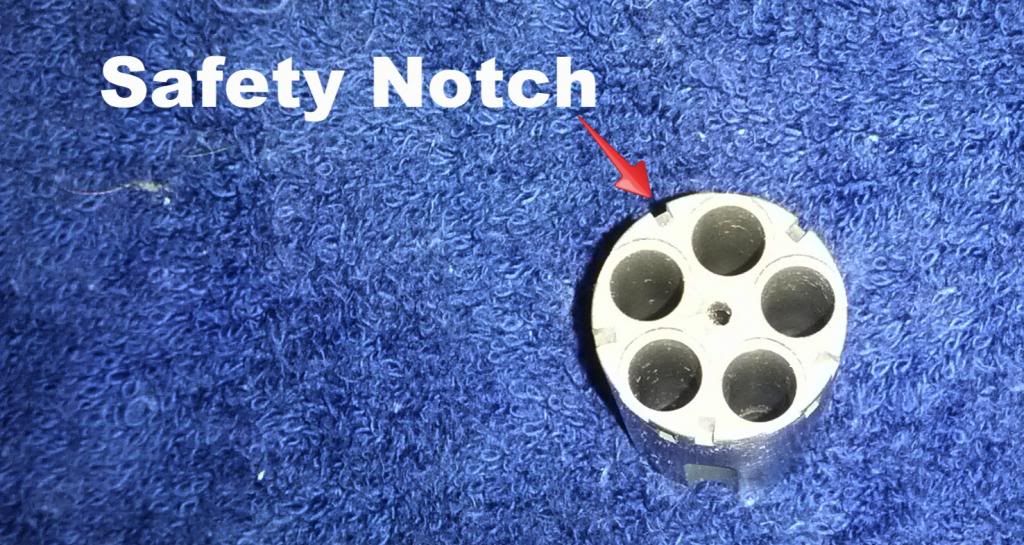
Cylinder removed, showing safety notch
 (and powder residue in the chambers)

Shooting the NAA Mini takes some getting used to.  For one thing, the grip is very small.  I can only get three fingers on the grip, with my pinky curled under it.  Also, the gun is single-action, requiring the hammer to be manually cocked before each shot.  I have found that I obtain the best results by using a two-handed grip, with my support-hand wrapped around my shooting hand, and using my support-hand thumb to cock the hammer, thus eliminating the need to change my grip with each shot.  The .22 Magnum, while a rimfire cartridge, is a powerful round.  Firing one out of a gun not much bigger than a Zippo lighter is, well...  exciting.  There is no painful recoil, but the entire gun tends to rotate barrel upward in your hand when it is fired.  With practice, one can learn how to control this tendency, however.  One thing I would stress is that hearing protection is a must when practicing with these revolvers:  the .22 Magnum absolutely roars out of this tiny little gun.

The NAA Mini is every bit as accurate as a revolver with a 1 1/8" barrel can be, once you learn how to shoot it.  I have found that using the front sight to aim results in shots being consistently below the point of aim.  Sighting along the top of the barrel, however, gives much better results.  Shooting slowly at a range of fifteen feet, I am able to get consistent three inch groups.  Rapid point shooting at the same distance, the groups open up, but I can still put all five shots inside of the 8-ring.  With more practice, I think I will be able to shrink that down to the 9-ring.

I do not pretend that the .22 Magnum is the best cartridge for self-defense.  However, I do believe that it is a serviceable round, and would certainly be capable of stopping a threat if one knows how to use it.  Nor do I think that a gun with a tiny barrel and rudimentary sights is the best option for a gunfight.  The NAA Mini Magnum is an up-close-and-personal "get off of me" gun...  what some people have called an "E.N.T." gun - short for ear, nose, and throat, meaning that the face, head, and throat would be likely areas to target with this type of weapon.  Thus, I will not be replacing my everyday carry gun with the NAA Mini Magnum.  However, I do believe that the Mini makes a great back-up gun to my S&W Model 60.  And on those occasions when I cannot carry "the Chief," at least I do not have to be completely unarmed.  The NAA Mini just gets popped into my front pocket, and I am ready to go.  In fact, since I purchased "Maggie," I have not left the house without her (so far I have been able to avoid the post office, courtrooms, and airplanes).  The Mini Magnum is one of the best ways to live the mantra:  always carry, never tell.
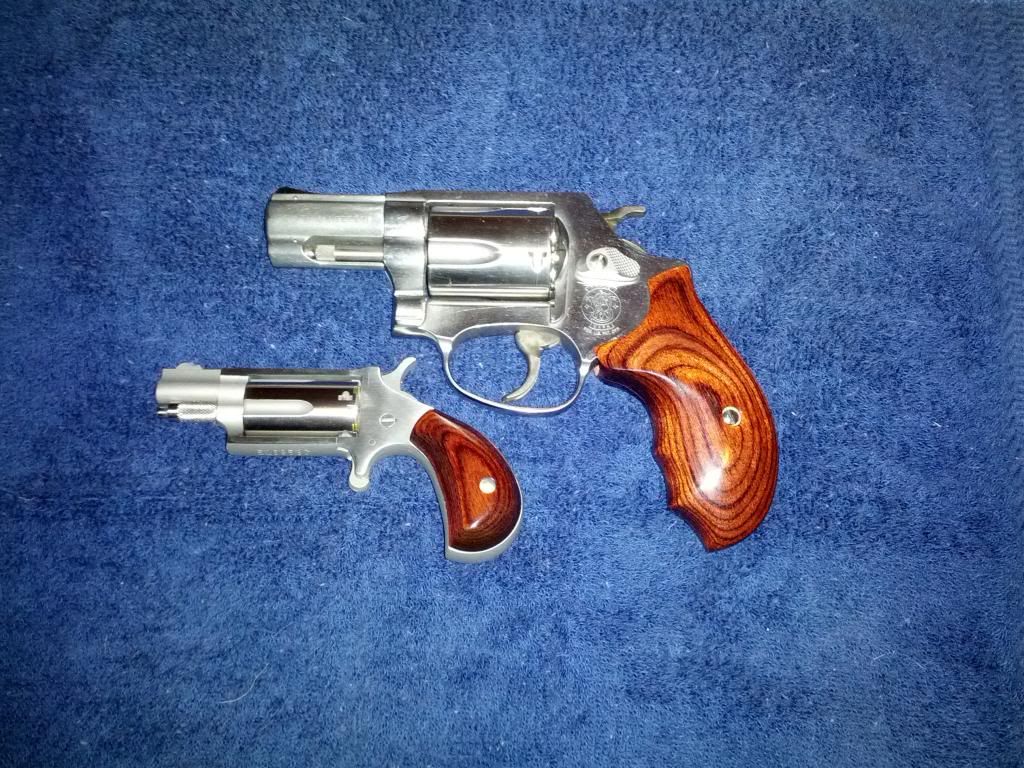
My (almost) matching pair of magnums:
S&W Model 60 .357 Magnum and NAA Mini Magnum


For more information:

North American Arms

Friday, May 25, 2012

Gun Review: Rossi Model 25 Princess .22LR Revolver

As a gun collector, I am constantly on the lookout for interesting, unusual, and uncommon pieces.  Now, do not get me wrong, I enjoy shooting, and therefor I put a premium on reliability and accuracy, but I also very much am interested in the history of guns as well, and I love firearms that are more than just your run-of-the-mill, everyone-has-one models.  Such as my Remington 878 Automaster, which I covered in a previous post...  it may not be worth a great deal in monetary value, but to me, it is valuable as a piece of Remington history, and thus of firearms history.  The same can be said of my military surplus rifles:  somewhere, sometime, someone trusted his life - and possibly his nation's survival - on these rifles.  Each arsenal repair, each little ding in the wood stocks, is part of a story, and I find that fascinating.
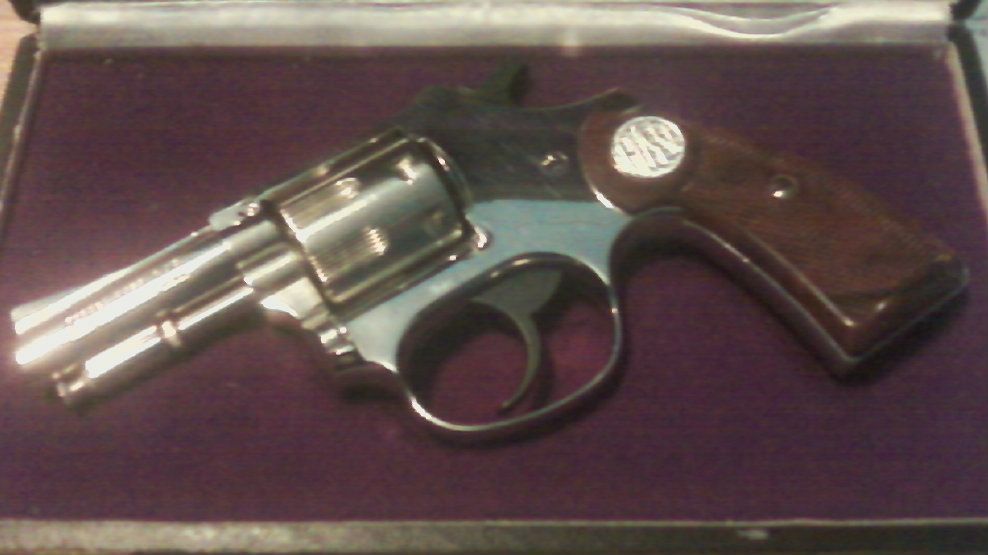
The Model 25 presentation case

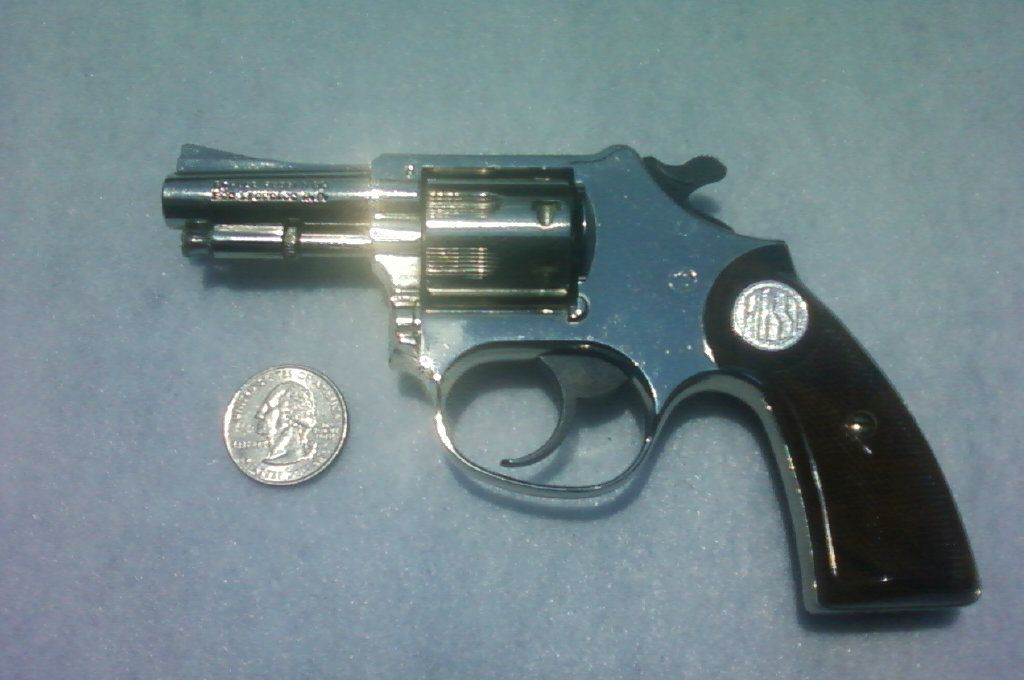
Recently, I came into possession of another little piece of history.  And I do mean little.  It is the Rossi Model 25, a petite revolver chambered in .22LR.  Known as the "Princess," this tiny little pistol is quite beautiful with its bright nickel-finish.  The left side of the barrel is stamped "AMADEO ROSSI & CIA/SAO LAOPOLDO R.S." while the right sideplate is stamped "MADE IN BRAZIL" with the Rossi trademark and the importer marking "FIREARMS INT'L CORP/WASHINGTON, D.C."  The right side of the barrel is stamped ".22 L.R."  The serial number is stamped on the frame below the grip.

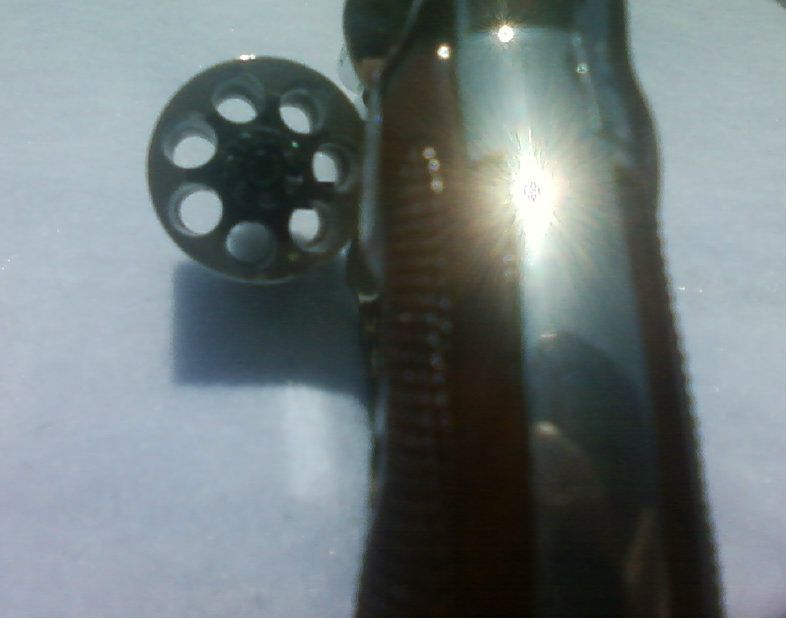
Just barely six and a half inches long, with a barrel length of two inches, the Princess is smaller than a grown man's hand (a 3-inch barrel version was also manufactured, designated the Model 13).  Despite its diminutive size, however, the Model 25 has a swing-out seven-shot cylinder with a manual ejector rod.  It is a single-action / double-action revolver, and while the trigger is quite stiff (I would estimate it at around fifteen pounds), it is smooth with no slop.  The brown plastic grips have some black marbling throughout, and they sport a round medallion (a la S&W) bearing the Rossi logo.  Actually, these are some of the nicer grips I have seen on Rossi revolvers.  The grip is very short, and leaves little room for a big hand...  this gun was definitely made with ladies in mind.


The Rossi Princess
Shown with a quarter for perspective

The frames of the Princess revolvers are die-cast of Zamak (or Zamac), sometimes disparagingly referred to as "pot metal."  Zamak is a zinc-aluminum-magnesium-copper alloy, which is actually quite strong, certainly for the frame of a .22LR revolver (Hi-Point Firearms uses Zamak for the slides on their centerfire pistols and carbines).  This results in quite a light weight pistol.


The Rossi Model 25 is a copy of the third model Smith & Wesson "Ladysmith," an M-frame revolver manufactured during the first two decades of the 20th century. The M-frame was the smallest hand-ejector frame made, and was used for the .22 Long, and was discontinued in the early 1920s.  Rossi, a Brazilian gun manufacturer (now a member of the Taurus family of firearms companies), resurrected this revolver concept, manufacturing the Model 25 for 28 years from the 50s through the mid-80s, with nearly a million of the little revolvers sold.  However, because of U.S. gun laws, primarily the 1968 Gun Control Act, relatively few Model 25s were imported into this country, all of them between the years 1965 through 1969.  It is getting more difficult to find these guns, especially in good condition.

Surprising amount of firepower for such a diminutive gun
Rossi, like its parent corporation Taurus, has a lot of detractors and, to be quite honest, not without good reason.  For a period of time during the 1980s, both companies suffered from poor quality control, turning out a large number of guns that had problems.  It does not take long for such inattention to sour consumers to a product line, especially when the primary purpose for many of these products is personal defense.  However, the early guns manufactured by both Rossi and Taurus were of quite good quality (and I understand that both companies are doing much better recently, trying to address the QC issues).  The Princess is just such a gun.  The internal parts are well-made, the cylinder lock-up is tight with no play.  The timing on the cylinder is spot-on as well, with no chamber misalignment.  It is simply a nice, tight little revolver, especially when it is compared to a lot of the other inexpensive revolvers that were being imported around the same time (Rohms, for example, which were notorious for being poor-quality).  Not too shabby for a gun that originally sold new for between $35 and $40 at your local Ace Hardware (recently these revolvers have sold for as much as $250 - $350 on GunBroker and other sites...  I call that a good return on an investment!).

One thing I have noticed, however, is that when shooting .22LR cartridges, you can get a bit of powder-flash coming from between the cylinder and the forcing cone (no lead shavings like that old Rohm used to shower me with, though).  This does not happen with .22 Shorts or .22 Longs, and I have to wonder if it is due to the newer hypervelocity .22LR cartridges being so much more powerful than the .22LR cartridges of the mid-Sixties.  I will try some sub-sonic loads soon to see if that makes a difference.  Accuracy with various loads has been quite good for a short barreled revolver.  This one is definitely a keeper.

If you have a Rossi Model 13 or 25, and have any more information on this gun, please leave a comment below.  Let me know what ammunition your Princess likes, and how well it is holding up.  There is not a lot out there on these revolvers (thanks to Ed Buffaloe at unblinkingeye.com for a great write-up, and the various gun fora from which I have gleaned some nuggets of wisdom), so anything you might have to add would be appreciated.

For more information on Rossi:

http://www.rossiusa.com/

Thursday, March 24, 2011

On the Edge: Rimfire Review of the Heritage Rough Rider .22LR / .22 WMR

For tonight's edition of SFTH, I have decided to try something new.  This will be the first in a periodic series of columns in which I give my reviews on rimfire guns, ammunition, and accessories.  I am entitling this series "On the Edge," so if you see that in the title, you will know what to expect.  I believe that rimfire enthusiasts are often overlooked in a lot of gun review sites, so hopefully I will be able to share my thoughts and experiences with you, and through your comments, you can share your own insights with myself and our other readers.

For my first On the Edge review, I have decided to cover my favorite rimfire gun:  the Heritage Rough Rider single action revolver.  And if you look at the GunTotingVigilante avatar, you will see this fine pistol which has become my favorite firearm to shoot.  When I go to the range, this gun almost always accompanies me.  Why?  Because it is accurate, inexpensive to shoot, and, if for no other reason, it is just plain FUN!

A little history lesson first.  Heritage Manufacturing operates out of Opa Locka, Florida.  It is an American owned and operated company in the business of providing fine firearms at relatively low cost to consumers all across our country.  Heritage manufactures its rimfire line of pistols, the Rough Riders, here in the States.  A line of big bore single action revolvers is also produced, but these are made from parts manufactured in Italy, then imported and assembled at the Florida plant.

The Rough Rider revolvers are available in both .22 LR (which also allows the use of .22 CB,.22 Short, and .22 Long) as well as .22 WMR, and some, like mine, come with both cylinders which can be swapped out in a matter of seconds by simply pushing in the cylinder-pin release, pulling the pin out, lifting out the cylinder, and replacing it with the new cylinder, then re-inserting the cylinder-pin.  Barrel lengths vary from 3.5" up to a full 9".  There are two types of frames available for these guns:  where it is allowed by State law, you can get a RR with an alloy frame, and in other states (HI, SC, IL, and MN) a steel frame is available.  The alloy frame is certainly strong enough for the low-power of the rimfire rounds, and it reduces costs, making these pistols some of the most affordable revolvers on the market, under $200 in many places, depending on model (I paid $180 for mine, a blued finish, pearl handled, 6.5" barrel LR/ WMR combo gun).

A variety of finishes is available, with a traditional blue (which I opted for), a case-hardened finish, a black satin, and a silver satin finish.  Purchasers also have a decent selection of grips to choose from, including colored laminated wood grips, Cocobolo grips, synthetic pearl finishes (mine wears the white pearl grips...  yeah, call me a New Orleans pimp), as well as synthetic ivory stocks.  Some of the Rough Riders come with old fashioned fixed sights which consist of a front blade and a grooved top-strap for the rear sight, while others have adjustable sights.  And every Heritage Rough Rider comes with a hammer-block manual safety, an unusual addition to a single action revolver, and one that takes getting used to (I feel that it is unnecessary, but as a former attorney, I understand why the company has opted to include it).

Ok, sure...  but how does it shoot?  Thought you would never ask.  As of the posting of this column, I have fired approximately 1250 rounds of .22LR, 50 rounds of .22 Super Colibri, and 70 rounds of .22 WMR through my Rough Rider.  I have never had a single malfunction, apart from having ammunition which failed to fire or squibbed (look for my upcoming review of Remington Thunderbolt ammunition).  Even when fanning back the hammer and firing as fast as I can, the timing and cylinder lock-up has always been right on.  While I have heard from other owners that have had to tweak their front sight blades to achieve accuracy, mine was dead on right out of the box.  One of my favorite skill tests is to line up shotgun shells at 10 and 15 yards and plink at them with this pistol.  And this gun is more than capable of making them dance, even at those ranges.  I have found that the gun seems to be a bit more accurate with LR rounds than with WMR, which is counter-intuitive to me, but seems to be borne out by the performance of the gun.

After all of those rounds, and the cleanings, and the holstering and unholstering, the finish still seems to be holding up very well, with just a little darkening on the frame around the forcing cone, but a lot of rimfire ammunition is notoriously dirty, and I imagine that has a lot to do with that.  The trigger is not the best in the world (not compared to, say, my dad's old Ruger Single Six, for example), but it seems to have improved with use.

All-in-all, this has been one of my best purchases.  I use this gun on a regular basis, and do not see that changing any time soon.  Maybe I am just living out my childhood cowboy fantasies (which will also be addressed in my upcoming review of the Henry Golden Boy), but there are few firearms that I enjoy shooting as much as this little revolver.  Is it destined to be a family heirloom?  Not at all.  But I would not be surprised if my Heritage Rough Rider is still being used by future generations of GunTotingVigilantes in the years to come.

For more information, go to http://www.heritagemfg.com .